
WELLNESS JOURNAL · 2026-11-26
Atherosclerosis: understand the risk factors
A visual guide to plaque in artery walls, risk factors, warning signs, clinical checks and practical everyday care.
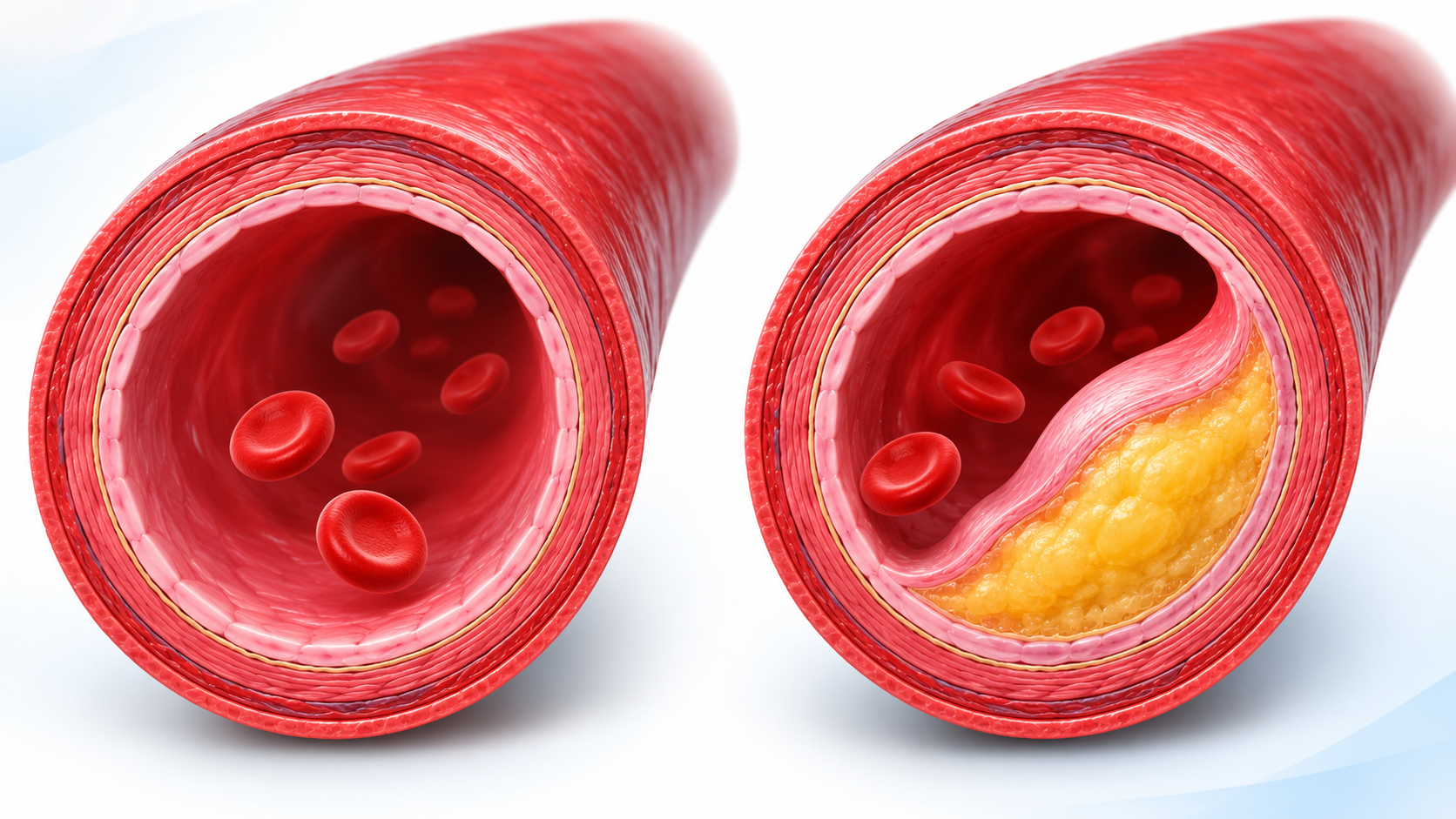
Generated educational illustration: left, a normal artery; right, plaque within the wall narrows the passage. This is not a patient scan.
What does atherosclerosis mean?
Arteriosclerosis is a broad term for arteries becoming thicker or less flexible. This article focuses on atherosclerosis: plaque building up within arterial walls. Plaque contains cholesterol, fats, calcium and other material; it is not simply fat floating in blood.
In the illustration, the left artery has a wide passage. On the right, plaque in the wall bulges inward and narrows that passage. The image explains a concept; it does not measure anyone’s disease or show a product result.
Why does a narrowed artery matter?
Plaque can reduce the delivery of oxygen-rich blood. Its effects depend on the arteries involved, such as those supplying the heart, brain or legs.
Some plaques can rupture and trigger a blood clot. Risk is therefore not explained only by how narrow an artery looks. Clinical assessment considers the wider health picture.
Know your risks before symptoms appear
High blood pressure, high cholesterol, diabetes, smoking and excess weight deserve attention. Low activity and diets high in saturated fat or salt can also contribute to cardiovascular risk.
Age and family history cannot be changed, but they help guide a discussion about checks. Note which relatives had heart disease and how old they were when it began.
High blood pressure and high cholesterol may be silent. Feeling well does not replace measurement. Bring recent results rather than judging risk from appearance alone.
Can it be silent? When should you seek assessment?
Atherosclerosis can cause no symptoms. Possible signs include chest pain, breathlessness, or arm or leg pain with walking or exertion. These symptoms have other possible causes and need assessment rather than an online diagnosis.
Severe chest pressure, major breathing difficulty, or sudden facial drooping, weakness or speech difficulty require emergency help. Do not wait for a rest to fix them or drive yourself to hospital.
What might a clinical assessment include?
Assessment combines personal and family history, symptoms and examination. Blood pressure and blood lipids may be checked, with further tests selected according to individual findings. Everyone does not need the same scan.
Prepare a medicine list, previous results, smoking history and notes about when symptoms occur, how long they last and whether exertion triggers them. Ask which results need follow-up and when to return.
A single sales demonstration image of blood is not this assessment and should not replace evaluation of plaque within arterial walls.
Build a routine you can sustain
Heart-healthy routines emphasise vegetables, fruit and whole grains while limiting saturated fat, salt and added sugar. Choose one achievable meal change, such as adding vegetables or tasting before adding seasoning.
General adult guidance includes at least 150 minutes of moderate activity per week. If you have a medical condition or symptoms with exertion, discuss suitable activity before starting or increasing intensity.
Stopping smoking, avoiding secondhand smoke and making time for adequate sleep also belong in a longer-term plan. Start with repeatable daily actions.
What if you have been prescribed medicines?
Treatment may include cholesterol-lowering or blood-pressure medicines and other care selected for your condition. Lifestyle measures usually work alongside treatment. Do not stop prescribed medicines because you feel better or begin using a wellness product.
Do not start aspirin on your own to prevent a blockage: it is not suitable for everyone and can cause bleeding. Record medicine names and any concerns to discuss with your clinician or pharmacist.
Keep everyday comfort in perspective
At HE&ME, bedding and clothing can be considered for everyday comfort: fabric feel, moisture management, fit and care. Blood pressure, cholesterol and vascular risk belong in clinical follow-up.
Our fabric and support-layer guides explain product choices. They should not be read as evidence that wearing a garment or sleeping on a mattress removes arterial plaque. Choose for practical needs while continuing your wider health routine.
Your practical checklist
- Gather recent blood-pressure and cholesterol results and your medicine list
- Note symptoms and family history
- Choose one sustainable food or activity change
- Ask about your personal targets and follow-up schedule
Sources and editorial notes
- NHLBI — What is atherosclerosis?
- CDC — Heart disease risk factors
- NHS — Atherosclerosis
- NHLBI — Atherosclerosis diagnosis
- NHLBI — Atherosclerosis treatment
Some topics were prompted by the supplied product booklets. Health information was checked against the sources listed; marketing material is not treated as proof of a clinical benefit.